Last week we looked at what I would call theological twists and turns about human sexuality.
Over the past two thousand years, in fact, Christianity has gone through a number of theological twists and turns. Most have involved a shifting focus on either “orthopraxy” or “orthodoxy.”
In a life-centered Christian theology, the primary focus is orthopraxy which means “correct conduct.” Orthodoxy, on the other hand, means and emphasizes “correct belief.”
Orthopraxy – correct behavior — was certainly fundamental in the life and teachings of Jesus of Nazareth: being courageous, compassionate, and inspiring in the midst of life’s ups and downs. Jesus certainly experienced life’s ups and downs.
In John’s Gospel, Jesus says: “I am the light of the world. Whoever follows me will never walk in darkness but will have the light of life.” (John 8:12) In orthopraxy, Christians do not walk in darkness but like the Good Samaritan they live out the Sermon on the Mount by caring for the marginalized, promoting compassion and peace, and sharing God’s love.
While Christianity eventually developed strict creeds, it began however with a strong focus on action and lifestyle—orthopraxy — following the “way” of Jesus
Orthopraxy is what we should be about today. Nevertheless, in Roman Catholic history the focus on an unquestioning acceptance of orthodoxy created an atmosphere of thought control and, quite often, fear for those who dared to question. Growing up as a Catholic teenager, I remember regularly saying the Act of Faith prayer, in which I so fervently prayed: “I believe these and all the truths which the Holy Catholic Church teaches because you have revealed them, who are eternal truth and wisdom, who can neither deceive nor be deceived. In this faith I intend to live and die.” I was a very pious young man.
Orthodoxy, however, is not life-centered but doctrine-centered. When orthodoxy is stressed, people are taught the official doctrine and must then unquestioningly accept that doctrine. Many people, however, can know and accept doctrine while still not living and behaving as Christians.
In the early twentieth century, the Catholic stress on orthodoxy was quite strong. From 1910 to 1967, all Roman Catholic “clergy, pastors, confessors, preachers, religious superiors, and professors in philosophical-theological seminaries” had to take the Oath Against Modernism, because theological modernism was considered dangerous. It interpreted Christian teaching by taking into consideration modern knowledge, science, and ethics. It emphasized the importance of reason and experience over doctrinal authority.
The Oath Against Modernism marked a high point in Pope Pius X’s campaign against “modernism” which he denounced as heretical. Although Pius X died in 1914, after being Pope for eleven years, his very far right influence on Catholic thought control lasted a long time.
Well, in the fullness of time, John Dick grew up and became an open-minded professor of historical theology in a “philosophical-theological seminary.” Fortunately, he never had to take the Oath Against Modernism. He did occasionally have to confront a couple bishops who strongly resonated with Pius X’s narrow vision and accused him of heretical teachings. One — now a retired East Coast cardinal — even tried, without success, to get him fired from the Catholic University of Leuven.
A bit of church history: The focus on a strongly enforced orthodoxy in Christianity began in 310 CE when the Roman Emperor Constantine (272-337) legalized Christianity in his Roman Empire. Although he was not baptized until close to death in 337, Constantine was very pragmatic about Christianity and wanted to use it for his own political agenda. He and his mother Helena (Flavia Julia Helena, c. 246–330) were already in the process of making it the state religion of the Roman Empire. Christianity did become the official state religion of the Roman Empire in 380 CE upon the issuance of the Edict of Thessalonica by Emperor Theodosius I.
Stressing his pragmatic use of Christianity, Constantine organized the First Council of Nicaea, from May to August 325 in Nicaea, which is modern-day İznik, Turkey. Christian bishops had to attend. Most significantly, the Council of Nicaea issued the very first uniform statement of orthodox Christian doctrine, called the Nicene Creed. Anyone who refused to obediently accept the Nicene Creed was excommunicated and exiled…or worse.
It is especially significant that the Nicene Creed says nothing about orthopraxy: nothing about correct Christian behavior. After Nicaea, Constantine continued his program, a profound “Constantinian shift” turning the previously pacifist and persecuted Christianity into a religion of military might and imperial power. Many historians wonder of course if Constantine was a genuine Christian believer or a user of Christianity to further his goals.
Constantine gave the world its first experience of “Christian Nationalism.” But, as Fr. Richard Rohr (born 1943) wrote a few years ago: “When Christians began to gain positions of power and privilege, they also began to ignore segments of Scriptures, especially the Sermon on the Mount. This is what allowed ‘Christian’ empires throughout history to brutalize and oppress others in the name of God.”
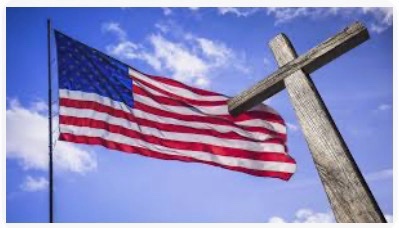
Christian nationalism is a problem around the world today of course. In North America, Project 2025, a 900-plus page policy blueprint organized by American right-wing think tank, The Heritage Foundation, is a plan to embed Christian Nationalist ideology into the federal government under the incumbent presidential administration.
But I would ask if Christian nationalists today are genuine believers or users of Christian rhetoric to further their own unchristian objectives.
- Jack
Dr. John A. Dick – Historical Theologian
Email: jadleuven@gmail.com

 Another Voice