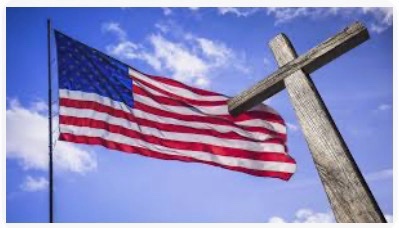
This week, I feel a strong need to return once again to some serious reflections about authoritarianism in very contemporary form. Many scholars observe that, around the globe, we are now experiencing a competitive authoritarianism where democratic institutions are being tested and eroded.
Authoritarianism has always bothered me because it uses and abuses people. It destroys human freedom to think, act, and live. It manipulates people and often destroys the “undesirables.”
The historical Jesus stressed that human greatness is based on compassion and service. His life story and teachings were used to motivate and guide people, to heal, support, and call to conversion. Some self-proclaimed “Christian leaders” today still do not get the message.
In contemporary political and religious life, we are confronted with a creeping virus of authoritarianism that seeks to dominate and control – and often displace and destroy. A very unhealthy kind of leadership. Honesty and integrity are replaced by self-promoting deceit and dishonesty.
Some symptoms of contemporary authoritarianism:
1. Ongoing efforts to intimidate and discredit the media, except for Fox News. The distinction between information and misinformation disappears.
2. Truth becomes fake news….and the actual fake news becomes the to-be-accepted real news. As George Orwell (1903-1950) predicted years ago: “War is peace. Freedom is slavery. Ignorance is strength.”
3. Police surveillance and violence against ideological “enemies” is accepted as a contemporary and necessary public safety necessity.
4. Foreigners are arrested, families are torn apart, and children and adults are incarcerated for indefinite amounts of time in military camps. Right now, in Utah, on the outskirts of Salt Lake City the state plans to place as many as 1,300 homeless people in what supporters call a “services campus.”
Authoritarian “leaders” can only succeed because because authoritarian followers applaud and support them. Much more so than the average person, authoritarian followers go through life with impaired thinking. Their reasoning is often sloppy and based on prejudiced beliefs and a fierce dogmatism, that rejects evidence and logic.
So what does one do?
We must first of all acknowledge that authoritarian followers are extremely resistant to change. The more one learns about authoritarianism, the more one realizes how difficult it will be to reach people who are so ferociously aggressive and fiercely defensive.
We need to educate and promote a balanced education which hands on authentic information, tells people where to find correct information, and gives people the skills to be well-informed critical thinkers.
Our Christian communities, more than ever, must become, compassionate and supportive gatherings of multicultural, multi-ethnic, and all-gender, brothers and sisters.
We need to courageously speak out and we need to help other people courageously speak out. If something is wrong or something untrue, people need to strongly and clearly state that it is wrong or untrue.
Those who courageously speak out need the strong support of friends gathered around them. Going alone is increasingly difficult if not impossible in our cyber-linked world.
We need to be on guard, as well, that we do not become promoters of polarization and vicious partisanship. We need to learn how to work together for the common good. As Jesus says in Matthew (chapter 12): “Every kingdom divided against itself is brought to desolation, and every city or house divided against itself will not stand.”
After last week’s reflection about contemporary young priests and American Catholics, this week I would like to offer some reflections about young Americans in “Generation Z.”
On October 4, 2025, Fox News claimed that members of Generation Z are returning to church in astounding numbers. Some people at once reacted that this was a new religious “great awakening” in America. But a leading religious trends researcher at Washington University in St. Louis, Ryan Burge, stressed that the Fox News assertion was really overblown: “We’re not seeing anything at the scale that would even begin to point in the direction of a sustained, significant, substantive revival in America right now.” (Religion News Service, October 21, 2025.)
Generation Z, often shortened to “Gen Z” and informally known as “Zoomers,” has approximately 70.79 million members, representing about 21% of the total U.S. population. They were born between 1997 and 2012. Many in Generation Z are now entering the full-time workforce.
Generation Z’s identity has been shaped by the digital age, climate anxiety, a shifting financial landscape, and COVID-19. They are known as “digital natives” because they are the first generation to grow up with the Internet very much a part of their daily life. Generation Z values fluidity, inclusion, and self-definition.
Another part of their identity: Generation Z is the least religious generation on record, with a large and growing number identifying as religiously unaffiliated, agnostic, or atheist. However, within this generation, there are pockets of increased religious interest, particularly among some young men who are drawn to more fundamentalist religions in a cultic way.
Generation Zers are also passionate about climate change and peace. But there is also a small number of Generation Z Republicans promoting Christian Nationalism; and many Generation Z Republicans voted for the incumbent U.S. president in 2024. Now, today, 67% disapprove of him.
Although Generation Zers generally identify as “spiritual,” Christianity doesn’t seem to resonate as much with them as it did with previous generations. About 45% of America’s Generation Z identify as Christian, according to Pew Research Center’s most recent Religious Landscape Study– a 10% decline from the previous 2014 survey. More than half of the Millennials, born between 1981 and 1996, and a little over 70% of Generation X, born between 1965 and 1980, identified as Christian. But less than a third of Generation Z attend religious services with any regularity.
Generation Z’s parents, belonging to Generation X, were the first generation to use “helicopter parenting,” an over-involved and overprotective style where parents hover over their children, micromanaging their lives and rushing to solve their problems. But Generation Z’s parents did very little to encourage their children’s regular participation in formal religion and to promote their religious development. Today, younger Generation Zers are driving the surge of Americans who identify as “religiously unaffiliated.”
Approximately 29% to 31% of contemporary American adults are religiously unaffiliated, meaning around 90 to 100 million people in the U.S. do not identify with a specific religion. This group, often called “nones,” includes atheists, agnostics, and those who describe their religion as “nothing in particular.”
Religiously unaffiliated Americans express skepticism about the societal benefits of religion. American religious identity, in fact, has experienced nearly three decades of consistent decline. Research has shown that every generation of adults is somewhat less religious than the generation that preceded it. This pattern continues with Generation Z demonstrating less attachment to religion than the Millennial generation.
Yes, in terms of identity, Generation Z is the least religious generation yet. But Generation Z’s relationship with religion is complex, marked by a significant increase in religious disaffiliation and atheism but also a rise in “spiritual but not religious” beliefs, and an active search for meaning. They may reject dogma but are engaged with existential questions, spirituality, and ethics, sometimes in unconventional, non-institutional ways.
Curiously, Generation Z is the first modern generation of Americans in which men appear to be more religious than women. But careful observation is important here.
Generation Z men are more likely than Generation Z women to support Christian Nationalism, and they actually have strong ideas about repealing women’s right to vote! Generation Z men view themselves as victims of modern culture and see themselves as part of a cosmic struggle between good and evil. If these young men view themselves as victims, they will more likely identify with protective male-dominated far-right religious movements.
Generation Z women, on other hand hand, represent, what some observers see as the most leftwing demographic movement in modern U.S. history. They are convinced that both Democrats and Republicans have capitulated in a way to the current presidential administration’s authoritarianism. They came of age amid climate crisis, debt, job insecurity, and the growing threat of authoritarianism. They do not see compromise as civility, but rather as danger. If older generations saw politics as negotiation, Generation Z women see it as self-defense. According to Melissa Deckman, CEO of PRRI the Public Religion Research Institute, in her book The Politics of Gen Z (Columbia University Press), Generation Z men are becoming more conservative as well as increasingly indifferent to politics, but Generation Z women have not only become the most progressive cohort in US history but are also expected to outpace their male peers across virtually every measure of political involvement.
What do we do today?
I think concerned people should focus on Generation Zers’ interest in spiritual growth and making a positive impact on the world. Not lecturing to them but traveling with them in thoughtful conversation and collaboration.
A new study about younger American Catholic priests highlights sharp differences between the outlook and experiences of older and younger clergy.
TheNational Study of Catholic Priests, released on October 15, 2025, by the Catholic University of America in Washington DC and conducted by the Gallup Poll, has found that younger Catholic clergy are far more conservative than their older counterparts. They are also not enthusiastic about their American Catholic bishops but remain positive about Pope Leo XIV.
Among priests ordained before 1975, 70% described themselves as progressive. But on the other hand, 70% of priests ordained after 2000 self-identify as “conservative” or “orthodox” meaning pre-Vatican II (1962-1965) in mentality.
Younger American Catholic priests today are more likely to prioritize Eucharistic devotion, while older clergy focus on issues like climate change, immigration, the LGBTQ community, poverty, racism, and social justice. Younger clergy are also far less concerned about the question of women’s influence in the Church than their older peers. When it comes to outreach to the LGBTQ community, 66% of priests ordained before 1980 consider this a priority, but just 37% of priests ordained in 2000 or later agree.
Many American diocesan bishops have curtailed celebrations of Mass in Latin, according to the 1962 Missal, also known as the Tridentine Mass, following the publication of Pope Francis’ 2021 document Traditionis custodes, which effectively reversed his predecessor Pope Benedict XVI’s liberalization of the older form of the Mass. But for the younger clergy access to the Traditional Latin Mass has now become a priority. Personally, if the Mass reverts to Latin, I think Catholic worship will revert as well to a spectator event with the congregation piously watching the priest.
In the recent Catholic University of America study, younger priests reported burnout and loneliness to a higher degree than older priests. A higher percentage of them believe that they are being asked to do more than they ought to be doing. This is no doubt due to parish structural changes, which have led to growing concerns about sustainability in ministry, especially as parish demands increase. Since the year 2000, many American dioceses have closed and merged parishes amid demographic changes. While most parish priests had traditionally been responsible for only one parish, today 23% oversee two, and 17% three or more. But noteworthy as well is the decline in the number of ministering priests. Between 1970 and 2024, the number of priests fell by more than 40%, from 59,192 to 33,589, according to Georgetown University’s Center for Applied Research in the Apostolate.
When it comes to contemporary political views, 61% of older priests say they are liberal compared to only 10% of younger clergy who self-identify that way. In fact, 51% of today’s younger priests, identify as politically conservative.
When it comes to American Catholics in general who are registered voters, 53% identify with or lean toward the Republican Party, while 43% affiliate with the Democratic Party. But 61% of White American Catholics align with the Republican Party; and 56% of Hispanic Catholics favor the Democratic Party.
American Catholics were mostly Democrats from the mid-19th century until the mid 1960s. Beginning with the decline of unions and big city machines, increased suburbanization, and upward mobility into the middle classes, Catholics drifted away from the liberalism of the Democratic Party.
Overall changes in today’s American Catholic Church are significant as well. Today, 20% of American adults describe themselves as Catholic. This is slightly lower than in 2007, when 24% of American adults identified as Catholic. The share of American Catholics who are Hispanic is rising. Currently, the American Catholic population is 54% White, 36% Hispanic, 4% Asian, and 2% Black. But since 2007, the share who are White has dropped by 10 percentage points. Curiously, American Catholics tend to be older than Americans in general with 58% of Catholic adults being 50 or older.
Surprisingly, American Catholics today do not agree with official Roman Catholic teaching about abortion. While the official Catholic Church strongly opposes abortion, around 60% of American Catholics, according to the Pew Research Center, say abortion should be legal in all or most cases.
I find it politically and religiously significant that three American Catholic bishops and a parish priest are among religious leaders the current U.S. President has appointed to his Religious Liberty Commission: Archbishop Salvatore J. Cordileone of San Francisco; Bishop Thomas J. Paprocki of Springfield, Illinois; and Bishop Kevin C. Rhoades of Fort-Wayne-South Bend, Indiana. Joining them is Father Thomas Ferguson, pastor of Good Shepherd Catholic Church in Alexandria, Virginia.
The U.S. Constitution’s prohibition of a national religion has long been interpreted as a mandatory separation of church and state. By setting up his Religious Liberty Commission the President is brushing aside the historic U.S. separation of church and state.
Especially significant, politically, and religiously, six of the nine current U.S. Supreme Court justices are Catholic: Chief Justice John Roberts, and Associate Justices Clarence Thomas, Samuel Alito, Sonia Sotomayor, Brett Kavanaugh, and Amy Coney Barrett. While most are conservative Catholics, Justice Sonia Sotomayor is a more progressive American Catholic.
Even more significantly, Kevin Roberts, the conservative Catholic architect of the Project 2025, the blueprint for a MAGA dictatorship, has close ties to the far-right Catholic organization Opus Dei.
Historically, Opus Dei grew rapidly during the years of Francisco Franco’s Spanish dictatorship from 1936 to 1975. Many Opus Dei members supported Franco and served in his administration. After 1945, Opus Dei began to expand internationally. In 1982, the global organization was elevated by Pope John Paul II to a personal prelature with headquarters in Rome. (A Catholic personal prelature is a special ecclesiastical jurisdiction for a particular group of clergy and laity, governed by a prelate.) Opus Dei’s founder, the Spanish priest Josemaría Escrivá (1902-1975), was highly respected by Pope John Paul II (1920-2005) and was canonized by him in 2002.
An interesting report published on October 14, 2025, in InfoVaticana claims that Pope Leo XIV is on the verge of approving new Opus Dei statutes that would effectively dismantle Opus Dei as a personal prelature and replace it with three distinct juridical entities.
Some concluding thoughts about American Catholics and the born-in-USA current Pope. Right now, I suspect Pope Leo XIV may be enjoying a honeymoon-type phase among American priests and American Catholics. Currently 86% of American priests express a great deal of confidence in him. Overall, according to the Pew Research Center, 84% of American Catholics say they have a favorable view of Pope Leo. But, interestingly, most American Catholics say they really do not know much at all about the new pope.
A trailblazer is usually the first person to do something and who shows that it is also possible for others to do the same.
This week, a reflection about women trailblazers: contemporary women who have broken barriers and inspire others.
My first thoughts are about Bishop Sarah Mullally who has been selected to become the new Archbishop of Canterbury. There have been105 male Archbishops of Canterbury since the establishment of the office in the 6th century. Bishop Sarah Mullally, as the 106th Archbishop of Canterbury, will be the first woman to hold that office and will be installed in a service at Canterbury Cathedral in March 2026. She became a priest in 2006 and was appointed as the first female Bishop of London in 2018.
Reflecting on her appointment, Bishop Mullally said she hopes to encourage her church “to continue to grow in confidence in the Gospel, to speak of the love that we find in Jesus Christ, and for it to shape our actions across the global Anglican Communion.”
Thinking about women trailblazers closer to home, at my alma mater, the Catholic University of Leuven (KU Leuven), founded on December 9, 1425, we now have, for the first time in six hundred years, a woman Rector: Professor Séverine Vermeire, who was elected on May 20, 2025, and began her term on August 1, 2025. A medical doctor and professor of medecine at the KU Leuven, she is also Research Director of Biomedical Sciences at our university.
Rector Vermeire recently stressed that the KU Leuven must continue to strive for innovative and excellent education, and that “Quality and humanity must go hand in hand.”
At the KU Leuven, we also have for the first time, a woman dean of the Faculty of Theology and Religious Studies, my friend Professor Bénédicte Lemmelijn. Bénédicte is a professor of Old Testament studies specializing in textual criticism. She is also a member of the Pontifical Biblical Commission at the Vatican. In May 2022 she was elected dean of the Faculty of Theology and Religious Studies.
Under Dean Lemmelijn, about one third of the current professors are women. Bénédicte says there is a lot to learn from the wisdom and experience of her predecessors. “But now is a different time…. Hope, in this context, is about looking forward to a new future, about longing for a new perspective.”
Today, women trailblazers in education, theology, and ministry need our encouragement and support.
For several years I have been following the not always smooth and easy path of women seeking priestly ordination.
The “Philadelphia Eleven” for example were eleven women who were the first women ordained, but irregularly, as priests in the U.S. Episcopal Church, on July 29, 1974. In 1975 four women, the “Washington Four,” were also, irregularly, ordained in Washington DC. Then in 1976, the General Convention of the Episcopal Church affirmed and explicitly authorized the ordination of women to the priesthood.
The ordination of women in the Anglican Communion, in fact, has been increasingly common in certain provinces since the 1970s.
A Roman Catholic group that very much interests me is the Roman Catholic Women Priests movement, even though they have not yet been officially recognized by Catholic authorities.
Change comes slowly in the RCC. In April 1976, the Pontifical Biblical Commission concluded unanimously: “It does not seem that the New Testament by itself alone will permit us to settle in a clear way and once and for all the problem of the possible accession of women to the presbyterate.” But on October 15, 1976, the Congregation for the Doctrine of the Faith in Rome issued a document affirming: “The Church, in fidelity to the example of the Lord, does not consider herself authorized to admit women to priestly ordination.”
Pope John Paul II stirred things up a bit more with his May 22, 1994, document Ordinatio Sacerdotalis. “We declare that the Church has no authority whatsoever to confer priestly ordination on women” the Pope wrote and continued “this judgment is to be definitively held by all the Church’s faithful.” The Pope had wanted to describe the ban as “irreformable,” but met substantial resistance from high-ranking bishops who gathered at a special Vatican meeting in March 1995 to discuss the document.
Change in the Catholic Church has most often followed a three-stage process. First a movement is condemned. Secondly, when it continues and grows, the movement is tolerated as an experiment. Thirdly when the movement becomes widespread, it is allowed as “part of the Catholic tradition.”
This three-stage process is seen in the history of the Beguines a lay womens’ movement particularly in the Low Countries, in the 13th–16th centuries. Beguines pursued a life of contemplative prayer, study, and active service in the world. They were active in Leuven as early as 1205 and began to really flourish in 1234. Nevertheless, in 1312 Pope Clement V and his Council of Vienne condemned the Beguines as heretics and called for them to disband. This happened two years after a Beguine named Marguerite Porete had been condemned as a heretic by theologians from the University of Paris. She was burned at the stake in central Paris on June 1, 1310.
Scholars today argue that the real reason the Beguines were condemned was that they were independent women who did not properly submit to male authority. Men sought to gain control over these rebellious women. Just as many modern Christians see the LGBTQ+ Pride movement as degenerate, many Christian men in the Middle Ages felt the same about the Beguines. They regarded these women’s lifestyle as unnatural. They feared the very existence of the Beguines might corrupt and defile “God-ordained gender roles.”
In any event, the Beguines continued and flourished. The papal condemnation of the Beguines, however, was not reversed until 1321 by Pope John XXI. They were then permitted to officially resume their way of life.
Change of course comes when there are new understandings about our past. Today, women historians and women theologians are giving us new insights and added information which earlier male historians and theologians either did not know or simply wanted to hide or ignore.
We know today that in early Christianity, women presided at Eucharist and exercised various ministerial roles. An important book about this is: When Women Were Priests by Karen J. Torjesen, Professor Emerita of Religion at Claremont Graduate University. In an earlier post I have also mentioned The Hidden History of Women’s Ordination by Gary Macy, from Santa Clara University.
Today I know a number of women priests and bishops in what is known as the international Roman Catholic Women Priests movement. They are trailblazers and their day will come.
The mission of Roman Catholic Women Priests movement is to prepare, ordain, and support women who feel called by the Holy Spirit and have been called by their communities to priestly ministry.
This international movement is operating worldwide with two groups formed in the USA referred to as Roman Catholic Womenpriests-USA (RCWP-USA) and the Association of Roman Catholic Women Priests (ARCWP). Both of these organizations have international members. Today there are more than 215 women priests and at least 15 bishops worldwide. These women priests and bishops are ministering in over 34 USA states and are also present in Canada, Europe, South and Central America, South Africa, the Philippines, and Taiwan. For more information see: https://romancatholicwomenpriests.org
It is very important that we support current and potential women trailblazers in education and ministry. Their often courageous actions are necessary for achieving gender equality and fostering social progress.
Who are the women trailblazers in your community? Who are the young women who can become trailblazers? And most importantly, how can we all be supportive of them?
A couple of months ago, I had an email exchange with a “young earth creationist.” He claimed that our Earth and its lifeforms were created by God between about 10,000 and 6,000 years ago. I replied that his “young earth creationist” perspective has already been strongly contradicted by established scientific data that puts the age of Earth at around 4.54 billion years. He proudly told me he was a devout fundamentalist Christian and not a “progressive liberal Catholic” like me.
The word “fundamentalist” was first used in print in the United States, in 1920, by the prominent American Baptist pastor Curtis Lee Laws (1868-1946), who was the editor of The Watchman Examiner, a national Baptist newspaper. Laws proposed that Christians who were fighting for the fundamentals of their faith should be called “fundamentalists.” But the term “fundamentalist” was not applied to other religious traditions until around the time of the Iranian Revolution in 1978-79.
In general, all fundamentalist religious movements arise when people are confronted with an unsettling disruption of their “normal” way of life. Sensing societal chaos, they develop strong feelings of anxiety and fear about losing control over their lives and losing personal and group identity.
Regardless of the religious tradition to which they belong, all fundamentalists follow certain patterns:
• Religious ideology is the basis for their personal and communal identity.
• They insist upon one statement of truth that is inerrant, revealed, and unchangeable
• They see themselves as part of a cosmic struggle between good and evil.
• They seize on historical moments and reinterpret them in the light of this cosmic struggle.
• They demonize their opposition.
• They are selective in what parts of the religious tradition and heritage they will stress.
Although we have not usually thought of Roman Catholics as fundamentalists, the term can be applied to some contemporary Roman Catholic individuals and movements. Catholic Fundamentalists consider themselves upholding purer beliefs and religious practices than regular Catholics.
An important book about U.S. Catholic fundamentalists, published this year, is Catholic Fundamentalism in America (Oxford University Press) by Mark S. Massa, S.J., who is professor and Director of the Boisi Center for Religion and American Public Life at Boston College. Professor Massa examines the motivations and the tactics of U.S. Catholic fundamentalists who have propagated an alternative universe of Latin masses and scorching rhetoric aimed at overthrowing post-Vatican II ‘liberal’ Catholicism.
Religious fundamentalists place such a high priority on doctrinal conformity and obedience to doctrinaire spokespersons that they end up sacrificing values basic to all the great religious traditions: love, compassion, forgiveness, tolerance, and caring. When Christian belief becomes highly fundamentalized, churches start to become repositories not of grace but of grievances. They become places where something like tribal identities are reinforced, fears are nurtured, and aggression and nastiness become part of their holy cause.
In their overwhelming seriousness about “their” religion, fundamentalists do not hesitate to intervene in political and social processes to ensure that society conforms to the values and behaviors required by their fundamentalist worldview. This can then turn into militancy and attempts to pursue their vision with violence, force, and warfare. In this process their agenda then moves to override the well-being and lives of the people they are trying to influence.
Fundamentalism appeals for a variety of reasons:
For people who feel unimportant or insignificant, fundamentalism says you are important because you are God’s “special messenger.”
For people who are fearful, fundamentalism says “you can’t be saved without us…join and be saved.”
For the confused, fundamentalism says one doesn’t have to think about doctrine nor even be educated in it. Just believe what fundamentalism teaches.
Fundamentalism makes the fundamentalist feel good about himself or herself. It is self-stroking.
Fundamentalism justifies hatred of one group of people for another, because it believes that God hates those who do not conform to the fundamentalist worldview.
Fundamentalism appeals to people burdened by guilt and shame because it exempts them from responsibility for situations or actions that cause guilt and shame. Fundamentalism says…if you are one of us, you are OK.
Fundamentalism excuses people from honest self-examination; and it justifies their prejudices, zealotry, intolerance, and hatefulness.
What does one do about fundamentalism?
The best way to confront the narrow vision of fundamentalism is through broad-based education that emphasizes critical, analytical thinking skills.
Broad-based education emphasizes the importance of gathering evidence and then proceeding to conclusions. Fundamentalists work in the opposite fashion. They begin with their conclusions and then search for arguments to support them.
We need to establish channels for dialogue and support those institutions that promote multi-cultural knowledge and understanding.
We need to courageously work against ignorance and speak-out about dishonest or faulty information. And speak-out about those who advocate and publish it.
We need to humbly realize that we too are still on the road to discovery. We cannot fall into the trap of many fundamentalists who have become self-centered know-it-alls.
I conclude this week’s post with a Raymond E. Brown quotation mentioned in his obituary by Myrna Oliver, in the Los Angeles Times, August 12, 1998. Raymond E. Brown (1928-1998), the eminent Catholic biblical scholar, died at Saint Patrick’s Seminary and University in Menlo Park, California on August 8.
“Truth is always complicated by the human envelope in which it is enclosed. It is not only an intellectual problem, but one at the heart of the Gospel itself. It was not sinners who turned Jesus off. It was the righteous religious types who felt they had all the answers.”
A follow-up on last week’s post about religious pluralism…
The historical Jesus, whose Hebrew name was Yeshua, belonged to the Hebrew faith tradition and had a keen knowledge of the Hebrew Scriptures. He did not establish a new religion. He did not set up a church. He called people to a new way of life. “I have come that they may have life, and have it in all its fullness.” (John10:10) His early followers were called “followers of the Way.”
Thought-starter: How do we live and promote the Way of Jesus today? How can we really inspire and motivate people?
The Fourth Gospel even tells us that Jesus celebrated the Hebrew Chanukah (Hanukkah). “Then came the Festival of Dedication at Jerusalem. It was winter, and Jesus was in the temple courts walking in Solomon’s Colonnade.” (John 20:22-23)
Thought-starter: How do you imagine Jesus in the temple or in a synagogue? Did people stare in awe at him? Or did they raise their eyebrows when he walked in with his band of young followers?
Jesus’ disciples were young men and women, inspired by his example, teaching, and divine wisdom. Most of them were probably under the age of twenty.
Thought-starter: Where do young men and women today get their Christian inspiration? What do we need to do? Whose wisdom do they admire today? How can we speak meaningfully to them about Jesus?
As the post-Resurrection community of Jesus’ disciples and followers began to grow, non-Hebrew members also joined.
Thought-starter: How do we welcome God-seekers today, especially those turned-off by organized religion?
Post-Resurrection Christian structural developments led to two things: the composition of the Gospels AND the formation of Christian faith communities with their own Christian rituals, symbols, and leadership, independent from the Hebrew communities.
There was also a growing concern about passing on the heritage of Jesus to future generations. This called for religious structuring.
Thought-starter: What kinds of institutional structuring and re-structuring do we need today, especially in view of institutional misogyny, clericalism, and doctrinal rigidity?
In the earliest Christian communities men and women held leadership roles and presided at celebrations of Eucharist. At first there was no ordination. No separate clergy. Later ordination was introduced, not to transfer some kind of sacramental power but for quality control. Only qualified men and women could lead Christian communities.
Thought-starter: How do we provide quality-controlled Christian leadership today? Have annual performance appraisals for clergy and bishops? Have parishes elect their pastors?
Religion and Faith:
Faith or “trust” is our personal and group experience of what we call the Sacred or the Divine: God. In Christian faith that experience is anchored in living in the Spirit of Christ.
Religion is not faith. Religion is a system of beliefs, rituals, and symbols designed to help people understand their faith experience. We use religion. We don’t worship it.
Unhealthy religion grows out of and supports clouded vision and hateful hearts.
Religion is healthy when it points to the Sacred. It is unhealthy when it only points to itself: to rituals, symbols, and religious leaders. Particularly unhealthy when it manipulates and uses people for the leaders’ self-serving goals. When this happens, one needs a reformation.
In Jesus’ days, as in our own days, some people have used religion-mixed-with-politics to achieve self-serving and ungodly goals. This combination was deadly for Jesus. It threatens our lives today as well.
Strenghtened in Christian hope, we move ahead anchored in the belief so well expressed in Luke:
“By the tender mercy of our God the dawn from on high shall break upon us,
To give light to those who sit in darkness and in the shadow of death,
To guide our feet into the way of peace.” Luke 1:78-79
Following up on last week’s post about being open-minded and inquisitive, my thoughts this week are a reflection about inter-religious understanding and collaboration.
Right now, on both sides of the Atlantic, fundamentalist religions’ polarization is fueling conflict and aggression. I am thinking about the politicization of Christianity with white Christian nationalism in the United States; the Hindutva movement in India leveraging Hindu identity to demonize and marginalize religious minorities; religious divisions within Europe concerning moral issues like LGBTQ+ rights; the extreme religious polarization in the Israeli-Palestinian conflict; and the global impact of social media in fostering religious extremism by connecting like-minded extremist people across borders.
Inter-religious education, tolerance, and understanding are crucial for the survival of humanity. For our survival and that of our grandchildren.
As I have often stressed, theological understandings do change over time. My own theological understanding of world religions began to change when I was a budding theologian and was greatly influenced by Nostra Aetate the Second Vatican Council’s Declaration on Non-Christians issued on October 28, 1965.
“In our time,” Nostra Aetate stressed, “when day by day humankind is being drawn closer together, and the ties between different peoples are becoming stronger, the church examines more closely its relationship to non-Christian religions. In the church’s task of promoting unity and love among all men and women, indeed among all nations, it considers above all, in this declaration, what people have in common and what draws them to fellowship. One is the community of all peoples, one their origin, for God made the whole human race to live over the face of the earth. One also is their final goal: God. God’s providence, God’s manifestations of goodness, God’s saving design extended to all people.”
French sociologist Émile Durkheim (1858-1917), one of the principal architects of modern social science, argued that religion is the most fundamental social institution, and, in one form or another, will always be a part of social life. Today, some 85% of people around the globe identify with a religion. While there are around 10,000 distinct religions in the world today, over three-quarters of the global population adheres to one of these four – Christianity (31%), Islam (24%), Hinduism (15%), and Buddhism (7%).
Another 7% of the global population identify with religions with much smaller followings. Judaism, though one of the three major Abrahamic religions (along with Christianity and Islam) is represented by just 0.2% of the global population (15.8 million), most of whom reside in Israel (7.2 million) and the U.S.A. (7.5 million). Had the Holocaust not wiped out over a third of world Jewry during World War II, it is likely the Jewish population would be twice the size it is today.
While I remain a strongly committed Christian, my own theological understanding has moved well beyond religious exclusivism: the theological position that maintains the absolute necessity of faith in Christ for all people. Exclusivists insist that there is no salvation in non-Christian religions. This position, today, is most often identified with conservative evangelical Christians.
Considering the world’s religions, I suggest we have to work together in what some of my favorite late twentieth century theologians like Karl Rahner (1904-1984), Hans Küng (1928-2021), Edward Schillebeeckx (1914-2009), and David Tracy (1939-2025) have called religious pluralism. We need to move beyond a simple tolerance for other religions and develop a positive appreciation for what they have to offer.
It is not always easy to be accepting of other religions. A friend reminded me last week that it was ten years ago, on December 15, 2015, that Larycia Hawkins, the first female African-American tenured professor at the evangelical Christian college, Wheaton College, in Illinois, was suspended from her job as professor after she vowed to wear a hijab for Advent in solidarity with Muslims and created a social media storm by posting on Facebook that she agreed with Pope Francis that “Christians and Muslims worship the same God.”
On February 8, 2016, Wheaton College and Professor Hawkins issued a joint statement that they had “reached a confidential agreement under which they will part ways.” On March 3, 2016, the Institute for Advanced Studies in Culture at the University of Virginia announced that Lyricia Hawkins would be appointed as the the University of Virginia’s Abd el-Kader Visiting Faculty Fellow.
Lyricia Hawkins’ story was later documented in A New York Times Magazine feature, on October 13, 2016: “The Professor Wore a Hijab in Solidarity – Then Lost Her Job.”
Nevertheless, today we all need to move from just inter-religious tolerance to collaboration. From collaboration to genuine appreciation. From appreciation to learning from the other. We are all on this journey together.
Global understanding, anchored in inter-religious dialogue and appreciation, is essential for everyone’s life and future.
This week, I am thinking about social change in our contemporary world. When people become closed-minded, polarization increases. Today, around the world people are grappling with the difficulties posed by the onset of pernicious polarization, pushing people to divide themselves into distinct close-minded camps, anchored in fear, anxiety, and rage. What gets lost is care, compassion, and civility.
The historical Jesus was keenly aware of the dangers of polarization. In Matthew 12:25, he alerted the closed-minded polarizing people in his days, saying “Any country that divides itself into groups which fight each other will not last very long. And any town or family that divides itself into groups which fight each other will fall apart.”
Today especially we need to promote being open-minded and inquisitive in our family and friendship groups, and in our social groups, and church communities. It is urgently important.
Being open-minded means recognizing and considering alternative viewpoints or opinions on a given topic. It involves being open-minded and willing to listen to different ideas without at once dismissing them. It means learning how to live and share life with others. It involves realizing that we all have much to learn about life in all its dimensions. I would emphasize that being open-minded means being less judgmental and more inquisitive and considerate. Open-minded people consider multiple perspectives before reaching a decision.
Sometimes, being open-minded can be very tough. It shakes a person loose from beliefs and values once so comforting. I once believed and felt secure in my belief that Jesus’ disciples were only men, and for that reason only men could become priests. I thought about becoming a priest as well. I pictured the historic Jesus ordaining the Apostles at the Last Supper. But then, thanks to a university professor who kept asking questions and encouraged me to ask questions, I started asking my own questions. Very quickly I learned that some of my certainties had no historic foundation.
Today I know that Jesus’ disciples were men AND women. As an historian I have learned as well that women presided at Eucharistic liturgies in the early Christian communities. I have also learned that the historic Jesus did not ordain anyone because ordination did not exist during his lifetime. In fact, in the first three centuries of Christianity, we have no direct evidence of an ordination ceremony.
Now I realize that on our human life journeys we do learn new things, by being open to the knowledge and insights of other people. Being open-minded learners, we do need to continually adjust our understandings and beliefs.
Being an open-minded believer truly enriches a person’s life. I can think of several ways:
Being open-minded and inquisitive enables one to explore and discover. Being an open-minded person allows one to experience new ideas and fresh thoughts that stimulate personal growth as they challenge old visions, understandings, and beliefs. It can be a very liberating look at one’s contemporary world through an open mind. Remember Paul in First Corinthians: “When I was a child, I talked like a child, I thought like a child, I reasoned like a child. When I became an adult, I put the ways of childhood behind me.”
Being open-minded and inquisitive opens a person to an awareness of divinity. Sometimes people get so wrapped up in their own little world that they miss the experience of God’s being with us, traveling with us, and loving us. This is spirituality which involves the recognition of a sense that there is something greater than oneself, something more to being human, and that the greater whole of which we are part is divine in nature.
Being open-minded and inquisitive enables one to observe and critique the honesty and truthfulness of what others say. This is so important today when so much ignorance and falsehood are presented as reliable realities. We all need to be critical observers and courageous critics. I often think about the admonition of the Belgian Joseph Cardijn (1882-1967) “Observe, Judge, Act” — the three-stage social action process that involves observing and understanding a situation, evaluating it using principles and values, and then taking proper action to improve or change it. Cardijn, who became a cardinal a couple years before his death, is best known for his lifelong dedication to social activism.
Being open-minded and inquisitive promotes personal change and transformation. Opening our minds to new ideas allows us the opportunity to change what we think as well as to change our view of the world. This does not mean one will necessarily change basic beliefs. It does mean one has to be open and respectful to people with differing perspectives. We work together. We must work together because our survival depends on it.
Being open-minded and inquisitive does make oneself vulnerable. This is scarier. In agreeing to have an open-minded view of the world, we acknowledge that we do not know everything. We accept that there are possibilities we may not have considered. This vulnerability can be both terrifying and exhilarating. The jar is either half full or half empty. It depends on one’s perspective. I prefer to say that it is only half full.
Being open-minded and inquisitive helps one see and acknowledge personal mistakes. With an open mind one begins to see things from others’ perspectives. One can recognize the mistakes one has made. From time to time, we all fail and fall. The challenge is to acknowledge it and then get back up again and continue the journey, anchored in the virtues of Christian humility and courage.
Being open-minded and inquisitive strengthens oneself and gives stability. It presents a platform upon which a person can build, putting one idea on top of another. With an open mind, one learns about new things; and one uses innovative ideas to build on old ideas. In my field we call this ongoing theological development. Dangerous stuff for the old guard ecclesiastics. Nevertheless, everything a woman or a man or a child experiences adds up. It strengthens who one is and what one believes. Note well: It is extremely hard to build on experiences without having an open mind.
Being open-minded and inquisitive helps one gain confidence. When a person really lives with an open mind, he or she develops a stronger sense of self. One can respect and appreciate but is no longer confined by the beliefs of others. Then the respectful dialogue can and should begin. It is absolutely necessary.
Being open-minded and inquisitive promotes self-honesty. Being open-minded means admitting that one is not all-knowing. Even if one is an older theologian! Whatever “truth” one holds, each person must realize that the underlying reality in its depth has more to it than anyone realizes. This understanding creates a sense of honesty that characterizes anyone who lives with an open mind.
For some people, being open-minded and inquisitive is easy. It seems to come as effortlessly as breathing. For others, having such an open and inquisitive mind can be a challenge. But for anyone who wants to safely travel the road of life, it is essential. We remember the words of Jesus, in John 8:32, “Then you will know the truth, and the truth will set you free.”
I am working on a family project for a few days. This week’s post, therefore, is a guest article written by my good friend Patrick B. Sullivan, DPA. Dr. Sullivan received his BA in History/Political Science and Master of Public Administration degrees from the University of Montana, a Master of Divinity degree from the Franciscan School of Theology in Berkeley, CA, and his Doctor of Public Administration from the University of Southern California. He has been a professor at two institutions for 12 years. He has a total of 50 + years of experience in the public sector. He is the past Director of the State Professional Development Center for the State of Montana. Currently, he is an independent consultant.
There are many groups in recent years who are apparently fascinated by the ten commandments. This is shown by their desire to have them displayed on courthouse lawns or in classrooms. It would seem prudent then, to take a closer look at the ten commandments in the context of today.
1. You shall have no other gods before me. You shall make no idols.
There are very few people today who create idols or worship some false god in the most literal sense. However, the commandment also warns us not to seek happiness or fulfillment in the wrong places. Only God and our intimate relationship with the divine can provide those. Too many seek happiness in what some happiness scholars refer to as “miswanting.” We believe that if we get that great job, or the best car, or achieve prestige, we will be happy. Science shows us that this is not true. How many times, after achieving one of those goals do we find ourselves rather empty. When I completed my doctorate, I thought I would be happy, or at least happier. That is not the feeling I had at all. Instead, I just thought, “what’s next?”
2. You shall not take the name of the Lord in vain.
Most of us think that this is about actually cursing. It is more about falsely declaring that God said we should do something that goes against the primary commandment of love. When we claim that we can justify our uncharitable acts on the divine, we are taking God’s name in vain. How many times have we heard various preachers, politicians, or even sports figures declare that God has mandated that they should be successful, rich, or powerful? Religions have done this throughout the centuries. God’s name has been used to justify slavery, misogyny, and intolerance. Millions of people have been killed in the name of God.
3. Keep holy the sabbath.
When, exactly is the sabbath? Different Abrahamic traditions have different days. Perhaps, it is every day. When Moses encounters God in the burning bush, he is told to remove his shoes, that he is standing on holy ground. So, keeping the sabbath holy could be seen as respecting that all of creation is holy every day. When something is holy, we respect it and treat it with care. This is especially true when we deal with others. In the creation story in Genesis, the statement at the end of every day is “and it was good.” After the sixth day, with the creation of humans, “it was very good.” The seventh day was a day of rest but also a day of reflection.
4. Honor your father and your mother.
The difficult thing here is that our parents are not perfect. They make mistakes in caring for us. I know mine did. Nevertheless, they did bring us into this world. We give them respect for that reason alone. To honor them is to become the best person we can be. We stop blaming them for our own difficulties and grow. We also forgive their faults and celebrate their wise guidance.
5. You shall not kill.
Of course, actually killing someone other than in self defense is prohibited. God created us and we do not have the right to take that away. We also murder by neglect. When we look away when people are starving, we are killing them. Whenever we deprive people of what they need to live, we are killing them. When we fail to provide adequate health care, even though we have the resources, we are killing people.
6. You shall not commit adultery.
This is less about sexual activity and more about relationships. When we betray a solemn relationship, we harm the other person. We also harm the person with whom we betrayed. We are using another person for our own pleasure. The provision is about authenticity in all our relationships. Rape is a violent act more than it is a sexual one. Using another person’s body against their will is an act of adultery.
7. You shall not steal.
Taking what does not belong to us is more than a selfish act. It lays claim to something to which we are not entitled. God has provided enough for everyone in this world. When we amass wealth while our neighbor is hungry, naked, or thirsty, we are stealing from them. There is no justification for having billionaires when others are suffering. When the uberwealthy claim that they are “self-made” they are stealing. This only shows a lack of gratitude and obligation to all those that got them to where they are today. There were parents, teachers, and other mentors who provided them with the skill to achieve. There are also all the workers that created their wealth and the infrastructure that made it possible. To make such a claim is selfish and false pride.
8. You shall not bear false witness against your neighbor.
This certainly includes falsely accusing someone of something they did not do. It even includes times when we did so without making sure of the facts. More commonly, though, it includes gossip. When we pass along information about another person, we are sharing something that is not ours to share. This is especially a problem when we have not witnessed it ourselves. It doesn’t matter if it is true or not. We must ask ourselves the question of whether or not there is a good reason to share such information. Gossip is destructive within any group. It undermines trust for the target of gossip and the person who is sharing it.
9. You shall not covet your neighbor’s wife.
This one is a bit problematic because it implies that the neighbor’s wife is his property. Perhaps, this needs to be understood in different ways. Again, it is about relationships. If we are looking at other people and wanting to either possess them or have them to ourselves, we are objectifying them. It also reflects a lack of gratitude for the relationship(s) we already have. It also applies to both male and female. To covet somebody is to fail to recognize their humanity.
10. You shall not covet your neighbor’s goods.
Coveting that which is not yours is an act of selfishness and lacking gratitude. The lack of gratitude is probably one of the biggest problems we have today. People are widely upset because they feel they should have more than they do. They want to find someone to blame because they don’t have enough. It’s okay to have things (within reason) but we need to be grateful for what we do have.
Notice that all of the commandments are about relationship. The first three are about relationship with God or the divine or the cosmos, whatever your preference. The rest are about relationship with each other. The ten commandments are properly summed up with the greatest commandment: “You shall love the Lord, your God with your heart, with all your soul, and with all your mind, … you shall love your neighbor as yourself.” (Matthew 22:37)